
Laparoscopy,
quietly explained.
The keyhole surgery Prof. Parkar helped pioneer in East Africa 25 years ago — now the gold standard for treating fibroids, endometriosis, ovarian cysts and more.
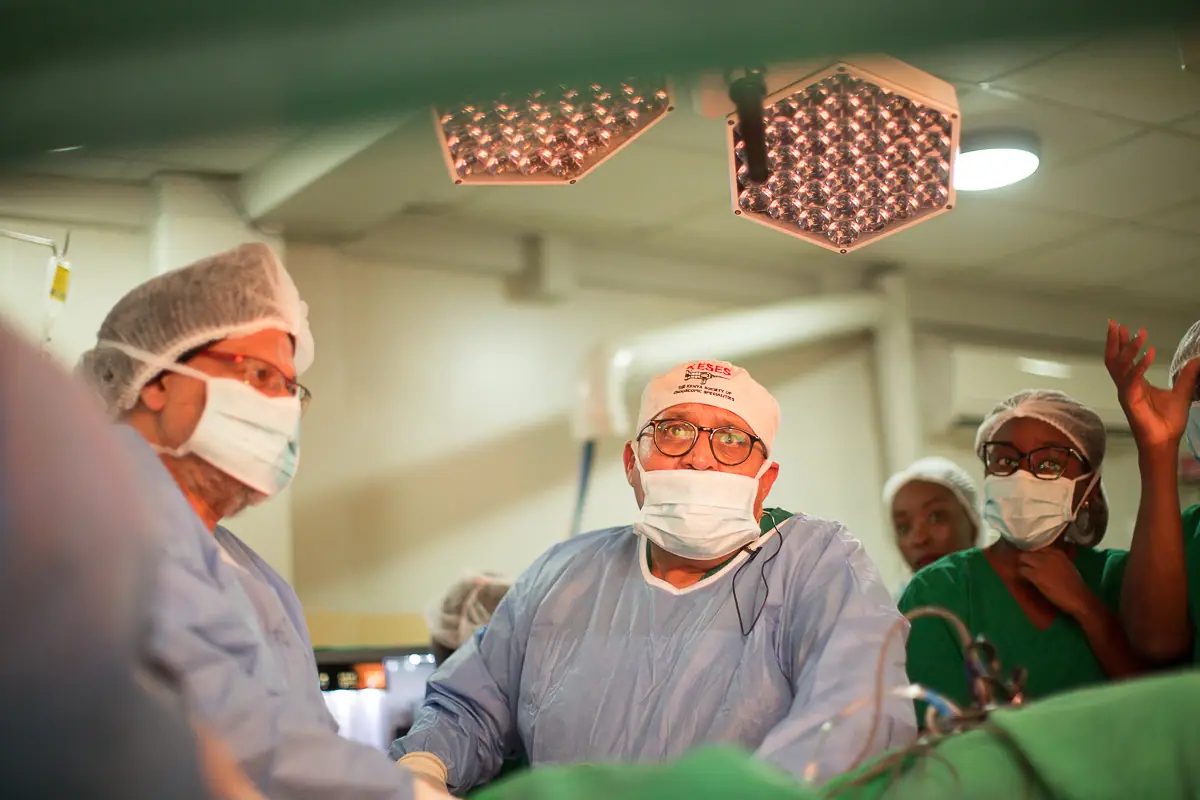
4–10 mm
Smaller than a fingertip
What laparoscopy actually is.
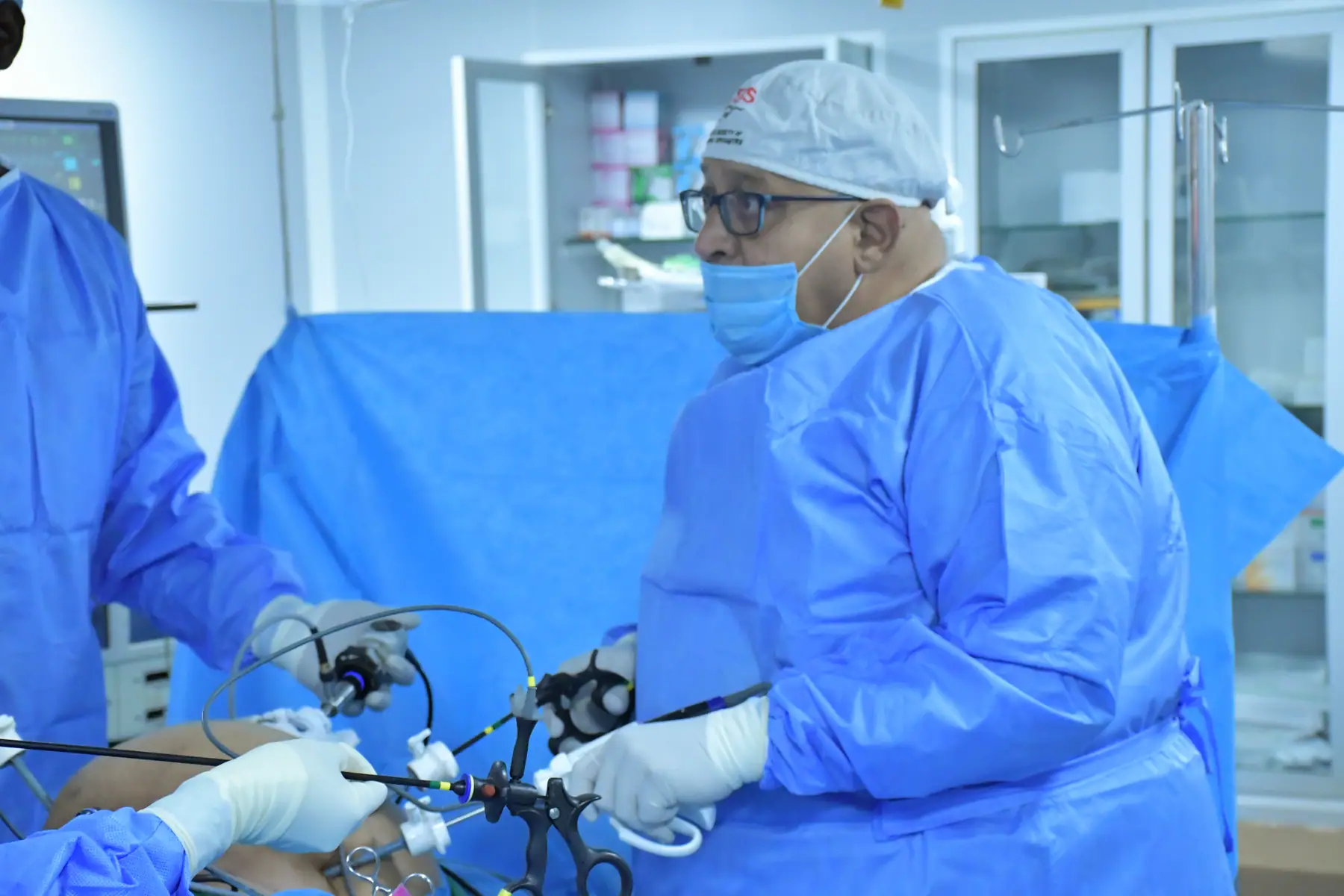
Laparoscopy — sometimes called keyhole surgery — is a technique in which the surgeon operates through 3 to 4 tiny incisions rather than a single long abdominal cut. A slim camera (the laparoscope) projects a magnified high-definition view onto a screen, while specialised instruments do the surgery with millimetre precision.
In gynecology, laparoscopy allows us to treat conditions inside the pelvis — the uterus, ovaries, fallopian tubes, endometrial tissue and pelvic ligaments — without ever making a large opening. Because the technique is precise, gentle on surrounding tissue and highly magnified, it has become the international gold standard for modern gynecologic surgery. Prof. Parkar has been performing and teaching it in East Africa for over 25 years.
Why women choose keyhole surgery.
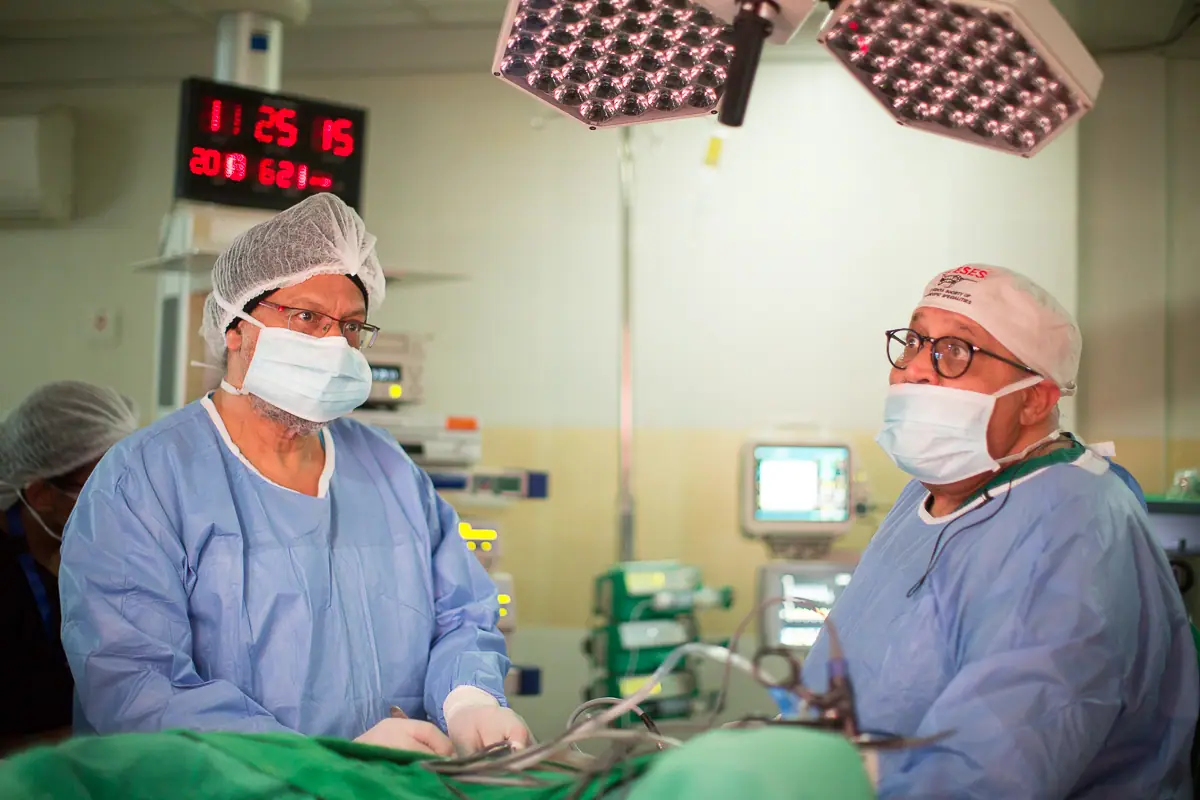
Minimal Scarring
Incisions of 4–10mm fade to near-invisible lines within months.
Less Pain
Smaller wounds, less tissue disruption — most patients need only mild analgesia.
Faster Recovery
60–70% faster than open surgery. Back to routine in days, not weeks.
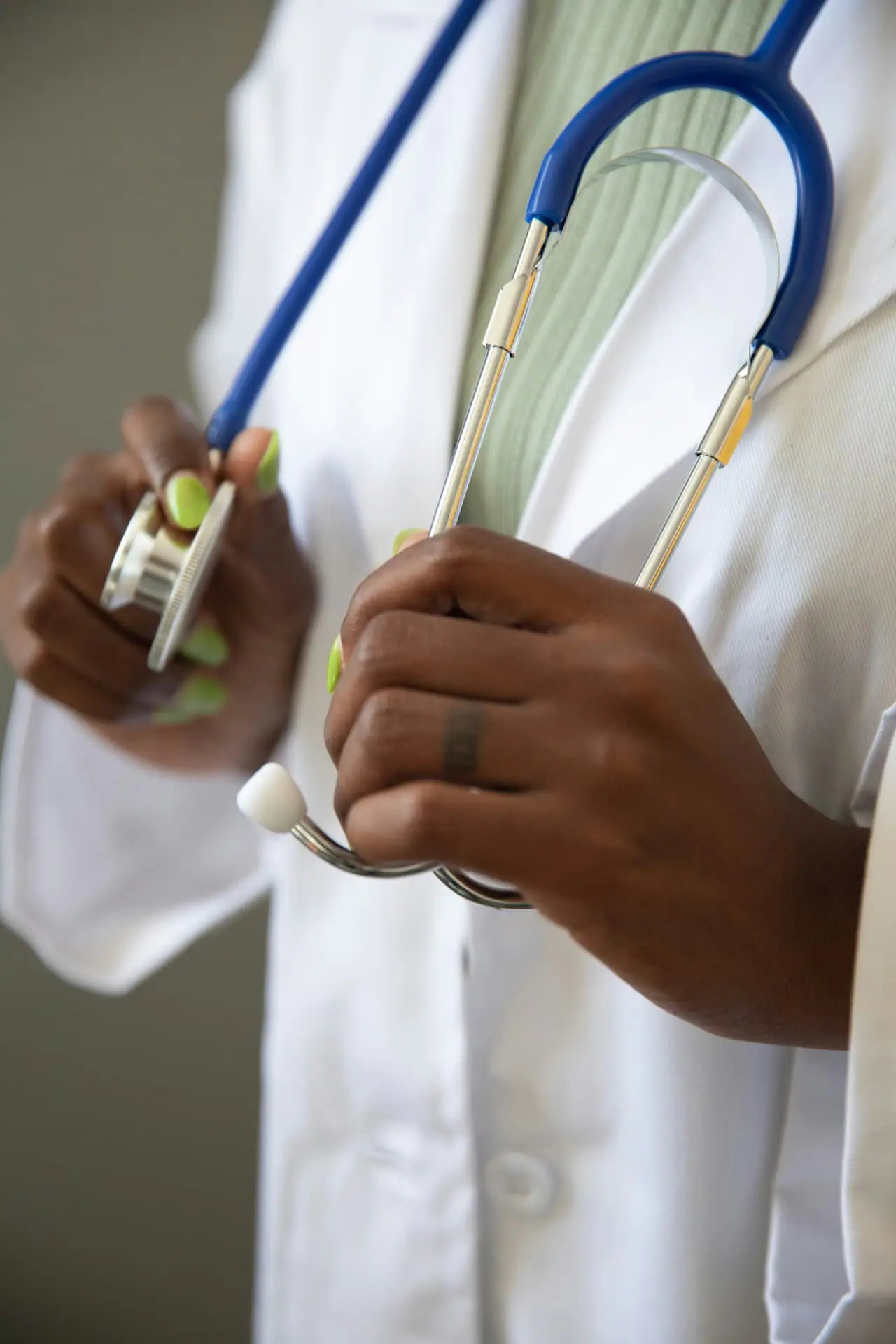
Lower Infection Risk
Less exposed tissue means substantially fewer post-operative complications.
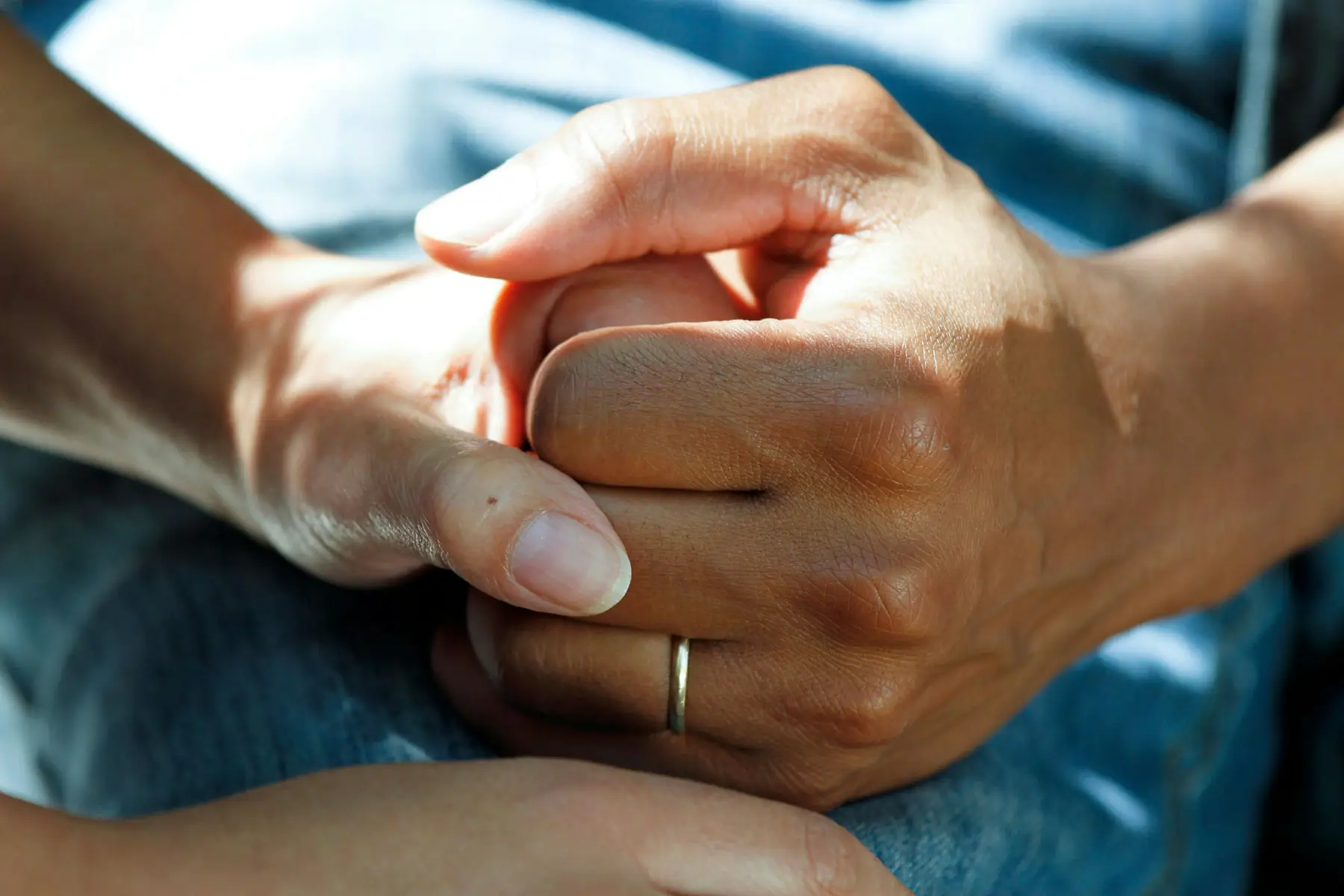
Greater Precision
10× magnification allows the surgeon to see and preserve delicate structures.
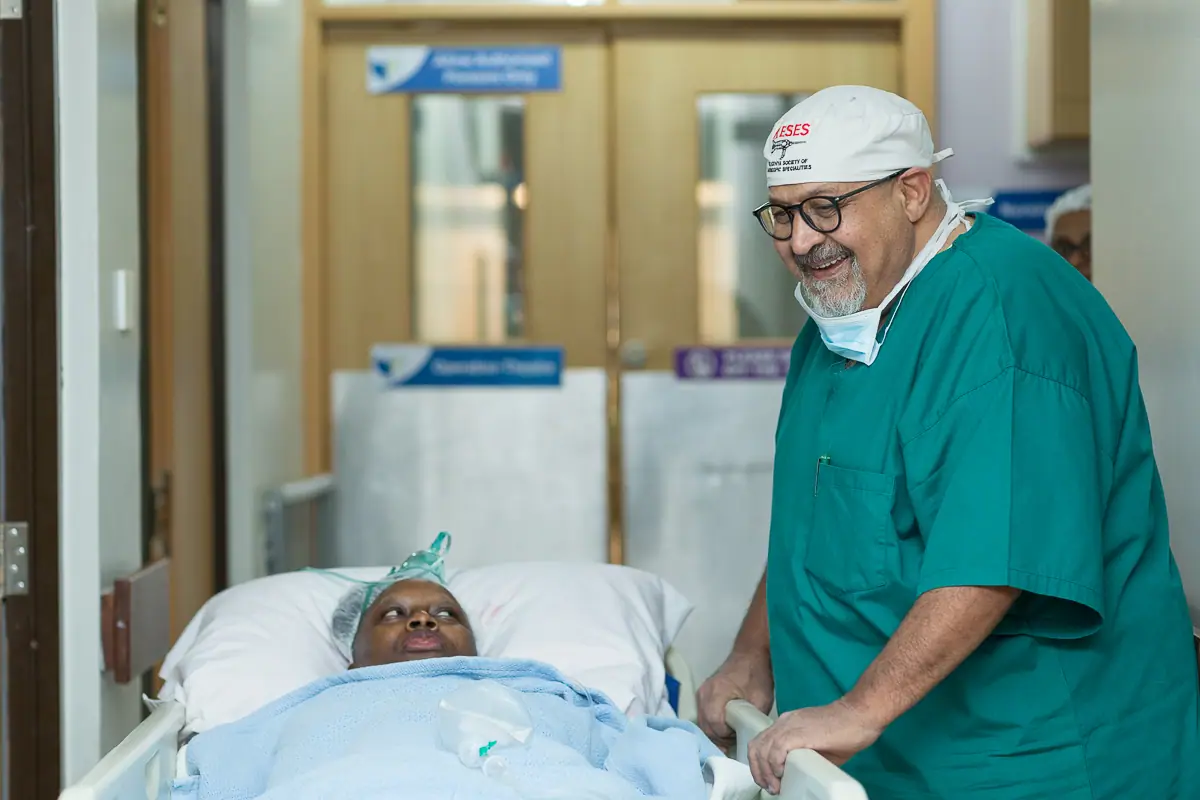
Same-Day Discharge
Most patients go home within 24 hours — often the same day.
What the day itself looks like.
- 01
Consultation & Workup
Prof. Parkar reviews your history, examines you and orders any imaging or bloodwork needed. You leave knowing exactly what will happen and why.
- 02
Pre-Operative Preparation
Overnight fasting; you arrive on the morning of surgery. Our anesthetist meets you personally and answers every question.
- 03
General Anesthesia
You are gently put to sleep. You will feel nothing, remember nothing, and wake up comfortable in recovery.
- 04
The Keyhole Incisions
3–4 incisions of 4–10mm are made — usually one in the navel and two or three along the bikini line, out of sight.
- 05
Precision Surgery
The laparoscope magnifies the surgical field 10×. Instruments treat the underlying condition while preserving fertility and healthy tissue.
- 06
Recovery & Discharge
You wake in a private recovery bay. Most patients are home within 24 hours — many the same day.
- Uterine Fibroids
Laparoscopic myomectomy — remove fibroids, preserve the uterus.
Learn more - Endometriosis
Advanced excision of superficial and deep infiltrating disease.
Learn more - Ovarian Cysts
Cystectomy that removes the cyst and spares the ovary.
Learn more - Ectopic Pregnancy
Urgent tube-sparing intervention to protect future fertility.
Learn more - Pelvic Adhesions
Careful release of scar tissue that causes pain or infertility.
Learn more - Hysterectomy
Total laparoscopic hysterectomy when medically indicated.
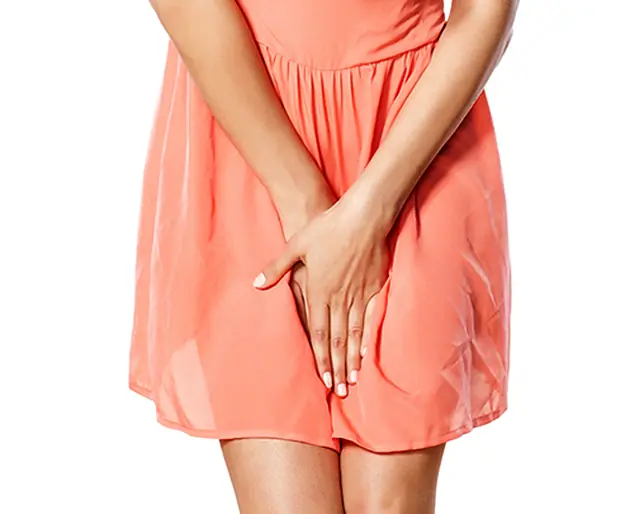
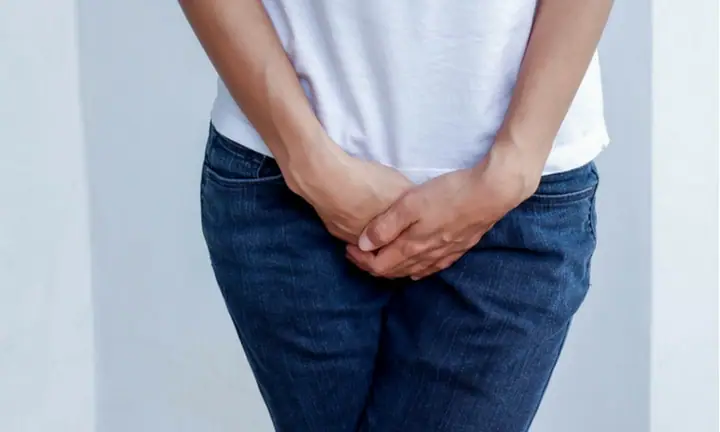
Learn more - Chronic Pelvic Pain
Diagnostic laparoscopy to identify and treat hidden causes.
Learn more - Infertility Workup
Tubal patency and pelvic assessment as part of fertility care.
Learn more






Home in a day. Yourself again in a week.
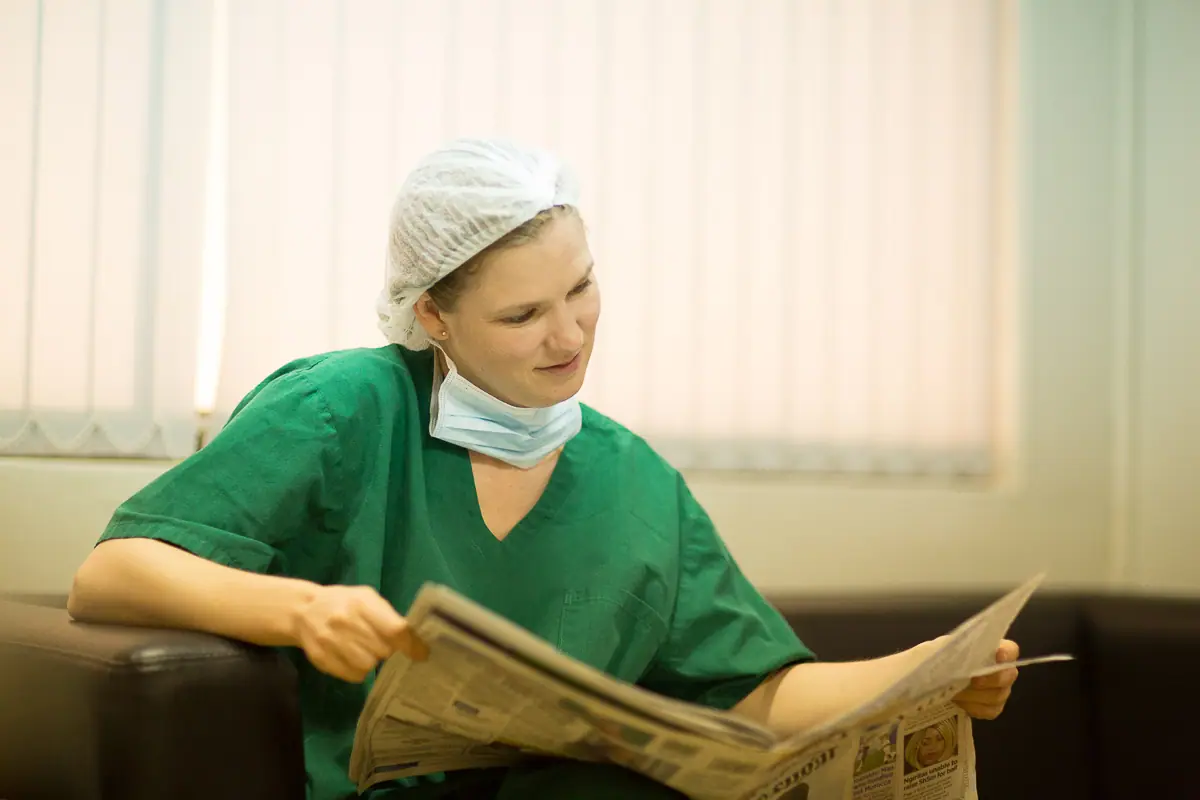
Because the incisions are so small, recovery is remarkably fast. Every patient receives a personalised recovery plan and 24/7 access to our clinical team should any question arise.
- Day 0
Surgery day. Home the same day or overnight stay. Mild soreness controlled with simple pain relief.
- Days 1–3
Rest at home. Short walks encouraged. Most patients stop pain medication by day 2 or 3.
- Days 3–7
Return to desk work. Driving usually resumed. Sleep and appetite back to normal.
- Weeks 2–3
Light exercise (walking, gentle yoga). Follow-up review at the clinic.
- Weeks 4–6
Full return to exercise, travel and intimacy. Final review with Prof. Parkar.
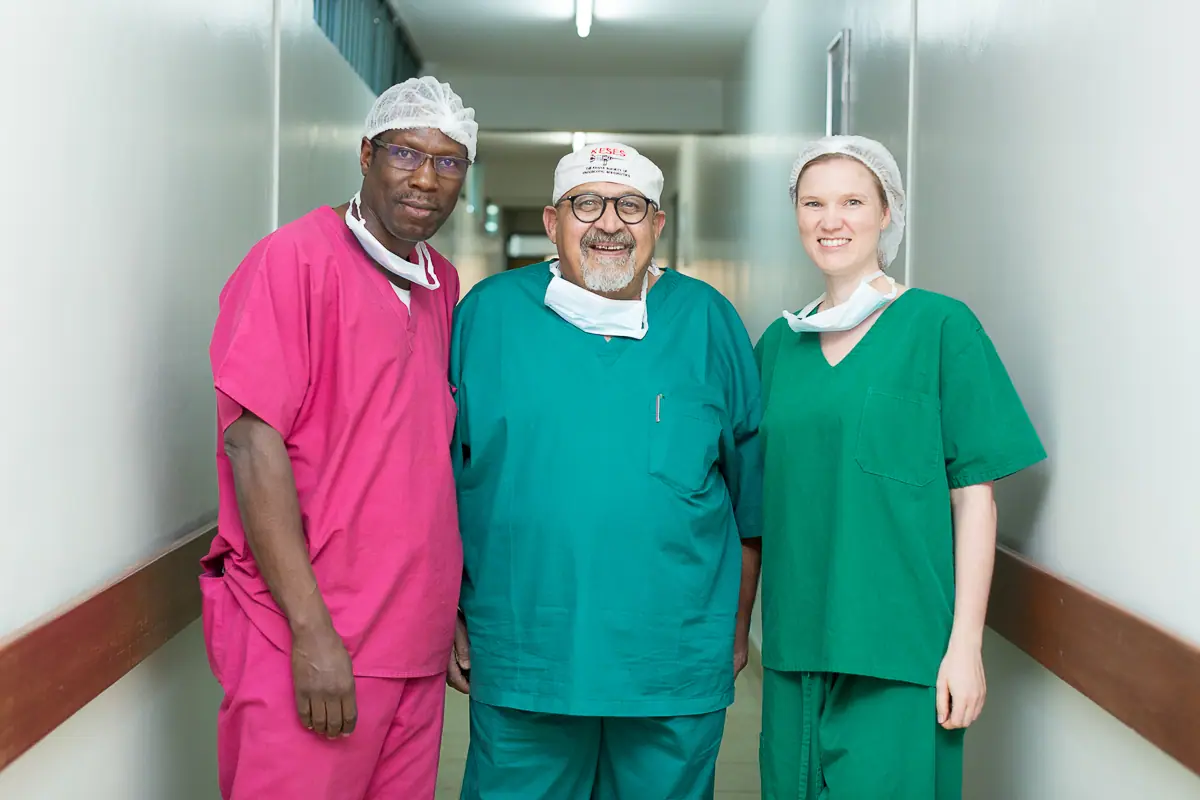
Twenty-five years of a single, quiet obsession.
Not every gynecologist performs advanced laparoscopy. Fewer still have spent 25 years refining it. When the technique matters, so does the surgeon holding it.
- One of the first surgeons to introduce advanced laparoscopic gynecology to East Africa
- FRCOG (Royal College of Obstetricians & Gynaecologists) and EBS certified
- Over 30,000 laparoscopic procedures performed
- Founder of KLASS — a dedicated laparoscopic surgery centre in Nairobi
- Internationally invited trainer and lecturer in minimally invasive surgery
- Personally leads every case — from consultation to final follow-up