
Diagnostic Laparoscopy in Nairobi — with Prof. Rafique Parkar
A direct, magnified look inside the pelvis when scans cannot give an answer. When ultrasound and MRI leave questions unanswered, diagnostic laparoscopy provides a direct, magnified view of the uterus, ovaries, fallopian tubes and pelvic lining. It remains the definitive way to confirm endometriosis, adhesions and unexplained pelvic pain.
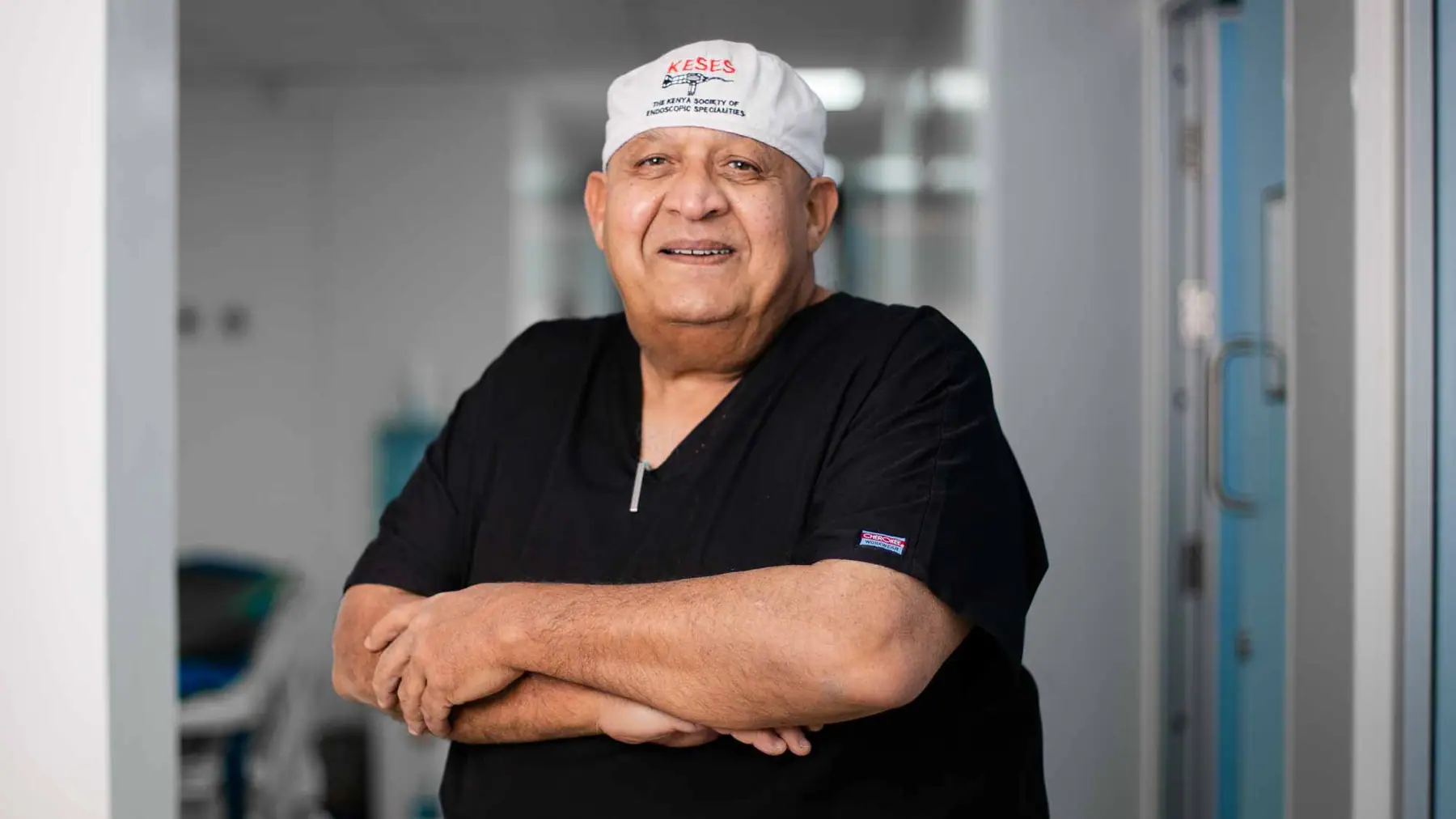
Understanding diagnostic laparoscopy
When ultrasound and MRI leave questions unanswered, diagnostic laparoscopy provides a direct, magnified view of the uterus, ovaries, fallopian tubes and pelvic lining. It remains the definitive way to confirm endometriosis, adhesions and unexplained pelvic pain.
Performed under general anaesthesia. A narrow telescope is introduced through a small incision at the navel, the abdomen is gently expanded with carbon dioxide, and the pelvis is inspected systematically. Findings are photographed and explained to you afterwards.
Symptoms
When to seek expert care
- Chronic pelvic pain
- Suspected endometriosis
- Unexplained infertility
- Pelvic adhesions
- Ovarian masses of uncertain nature
Causes
What we currently understand
- Hormonal imbalance affecting the uterus, ovaries or endometrium
- Previous pelvic surgery, infection or inflammation
- Structural change within the uterus, tubes or ovaries
- Genetic and family predisposition
- Age-related and reproductive-stage changes
- In some cases, no single identifiable cause
Risk Factors
Who is most affected
- Family history of gynecologic disease
- Previous pelvic or abdominal surgery
- Untreated pelvic infection
- Delayed diagnosis of pelvic pain or abnormal bleeding
- Endometriosis or fibroids already diagnosed
- Obesity and metabolic factors
Diagnosis
A careful, layered workup
- Detailed history and pelvic examination
- Transvaginal and abdominal ultrasound
- MRI in complex or deep disease
- Blood tests including hormonal and tumour markers where relevant
- Diagnostic laparoscopy when imaging is inconclusive
- Fertility assessment when pregnancy is planned
A tailored plan — not a template.
Every option is discussed openly with you, with the risks, benefits and alternatives laid out clearly.
Diagnostic Laparoscopy
A direct, magnified look inside the pelvis when scans cannot give an answer.
Operative Laparoscopy
Definitive keyhole treatment of fibroids, cysts, endometriosis and adhesions.
Small incisions. Real recovery.
Prof. Parkar pioneered laparoscopic gynecology in East Africa. Advanced keyhole and hysteroscopic techniques mean less pain, minimal scarring, and a faster return to life.
Discuss Your Options- Incisions of only 4–10mm, hidden along the navel and bikini line.
- Usually performed as a day-case or with a single overnight stay.
- High-definition optics magnify the surgical field for precise, tissue-sparing work.
- Fertility and ovarian reserve are protected wherever it is safe to do so.
Recovery
What to expect after treatment
- Home the same day in most cases.
- Light activity within 24–48 hours, full activity within a week.
Why patients choose this approach.
A trusted name in African gynecology.
25+ Years of Pioneering Work
Prof. Parkar introduced laparoscopic gynecology to East Africa and continues to train surgeons across the continent.
FRCOG · EBS Board Certified
International qualifications and continuous participation in world-leading gynecology bodies.
Personal, Unhurried Care
Every consultation is private, thorough and explained in plain language — never rushed.
Complete Multidisciplinary Team
Anesthesia, imaging, fertility and, when needed, oncology colleagues working as one team.
Questions about diagnostic laparoscopy
Speak to Prof. Parkar today.
Choose a time that works for you — online or in-person at Aster Healthcare, 3rd Parklands Avenue, Nairobi. Same-day responses and full pre-consultation guidance.